
Museo Jumex in Mexico City is currently running Football & Art: A Shared Emotion, an exhibition that treats the sport as a subject for contemporary art across generations and media. On June 10, the museum opens Objects of Glory, a memorabilia showcase spanning the game from its origins to the present day. The two shows overlap for six weeks. Their framing does not.
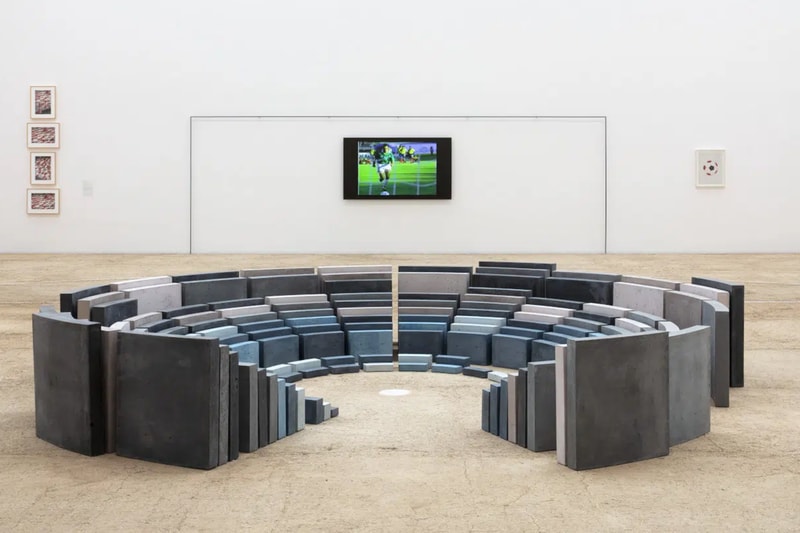
Football & Art positions the sport as raw material for artistic production. The curatorial premise is that football has operated as a recurring subject for painters, photographers, and video artists who find in the game's rituals, physicality, and crowd dynamics something worth formal investigation. The exhibition draws from the Jumex collection and loans, presenting work that treats football not as content to be documented but as structure to be analyzed.
Objects of Glory operates on a different logic. The memorabilia showcase privileges authenticity, provenance, and market value. A match-worn Pelé jersey is not presented as a material artifact of labor or performance; it is presented as a collectible whose worth derives from chain-of-custody documentation and scarcity. The exhibition's vocabulary is the vocabulary of auction houses and sports investment funds, not museums.
The institutional contradiction is not subtle. Museo Jumex, a private museum founded by Eugenio López Alonso and funded by the Jumex juice fortune, has built its reputation on programming that positions contemporary art as a serious intellectual enterprise. The building, designed by David Chipperfield, signals seriousness. The collection, heavy on 1990s and 2000s conceptual and post-conceptual work, signals curatorial rigor. Objects of Glory does not fit that frame. It fits the frame of a sports bar with better lighting.
The operational question is whether the museum is hedging. Football fever, as the museum's own press materials note, is on the up. The 2026 World Cup, co-hosted by Mexico, the United States, and Canada, opens in June. Scheduling two football exhibitions to run through the tournament's group stage is not accidental. But one of those exhibitions treats the sport as art, and the other treats it as asset class. The museum is programming both simultaneously, collecting ticket revenue from both, and leaving the conceptual gap unnamed.
This is not new for private museums. The Broad in Los Angeles has staged Instagram-friendly immersive shows alongside its permanent collection of postwar and contemporary work. The Fondation Louis Vuitton in Paris has programmed crowd-pleasing retrospectives to underwrite more demanding exhibitions. The difference is that those institutions typically sequence commercial and curatorial programming. Museo Jumex is running them concurrently, in overlapping timeframes, under the same roof. The visitor who enters for Football & Art can wander into Objects of Glory without changing floors.
The result is a museum that claims football as contemporary art subject and football memorabilia as trophy case content at the same time. Those two claims do not coexist easily. One treats the sport as something to think through. The other treats it as something to own.