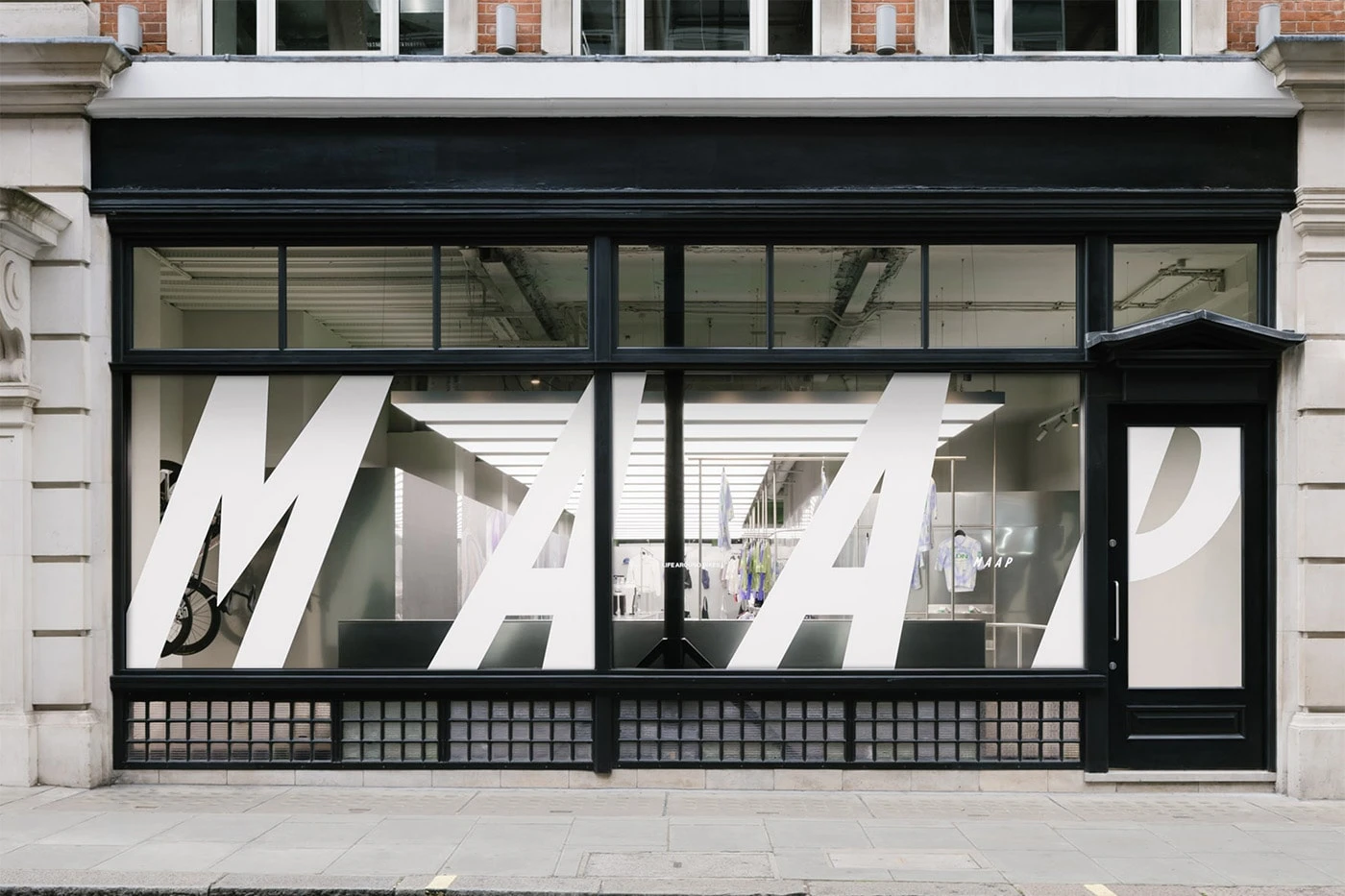
The door on Great Pulteney Street opens onto raw steel shelving, a service counter that looks borrowed from a bike mechanic's bench, and wall panels that nod to the Georgian brickwork outside without pretending to be heritage retail. This is a cycling apparel store that has stopped looking like one.
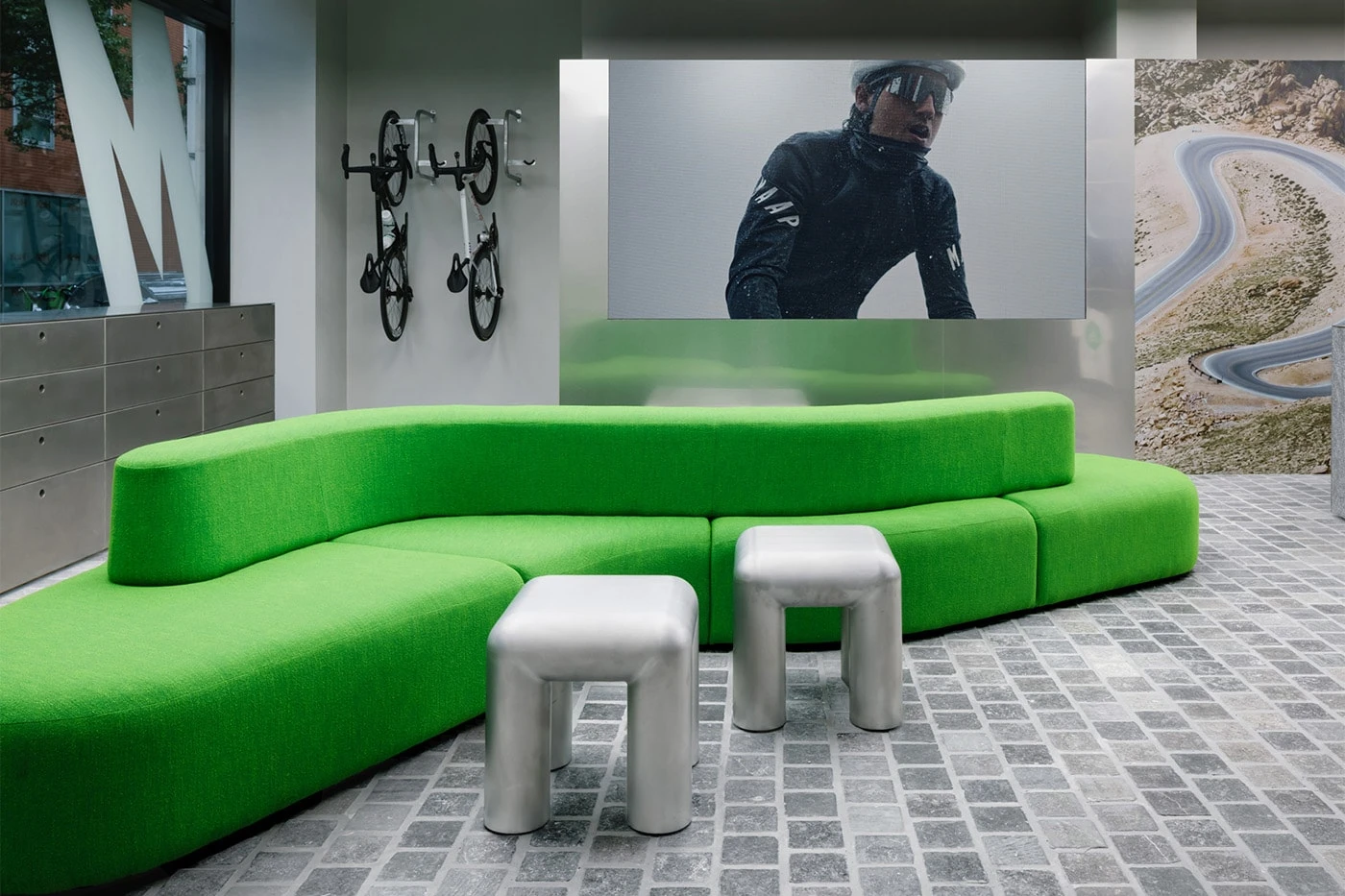
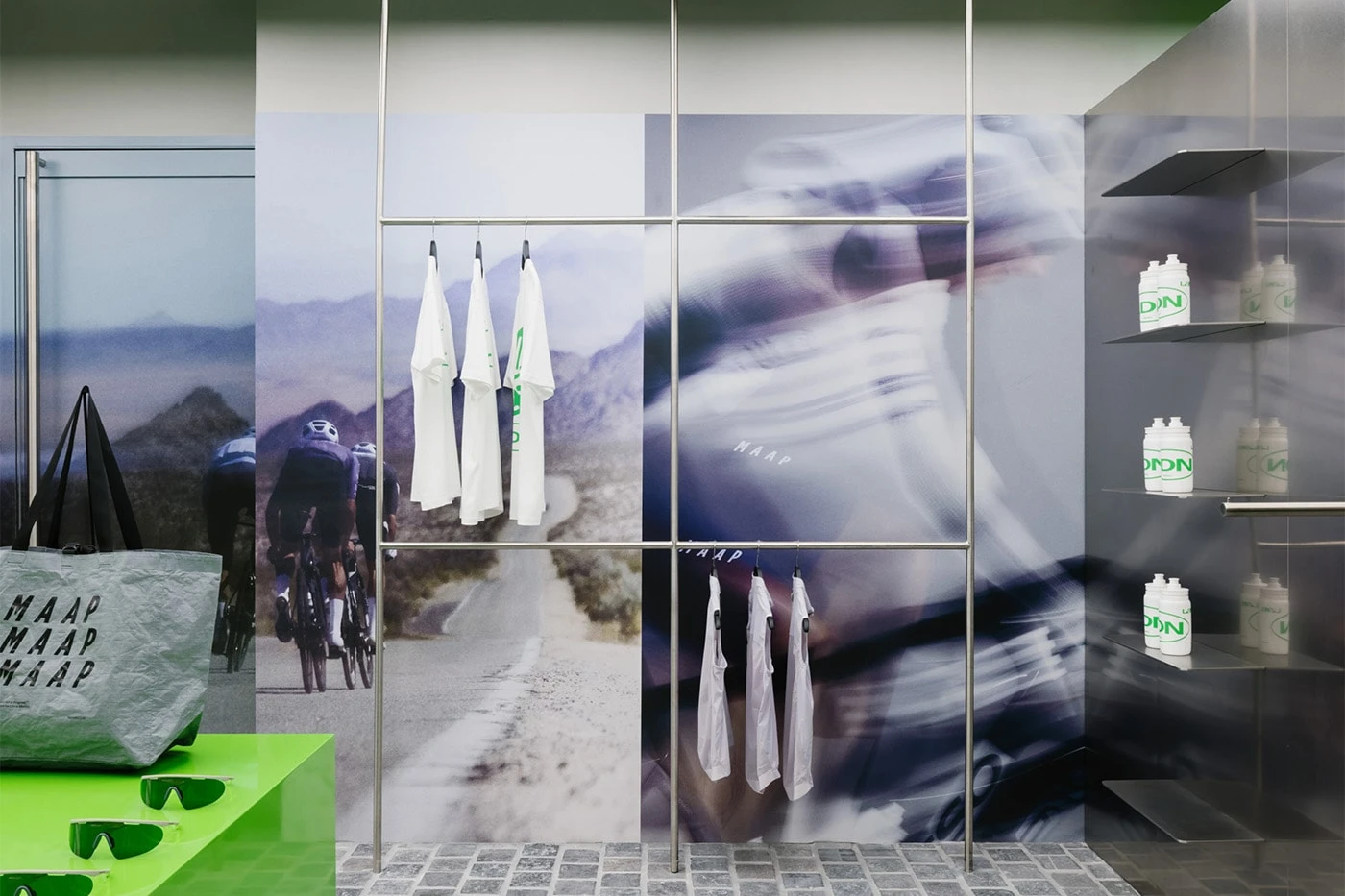
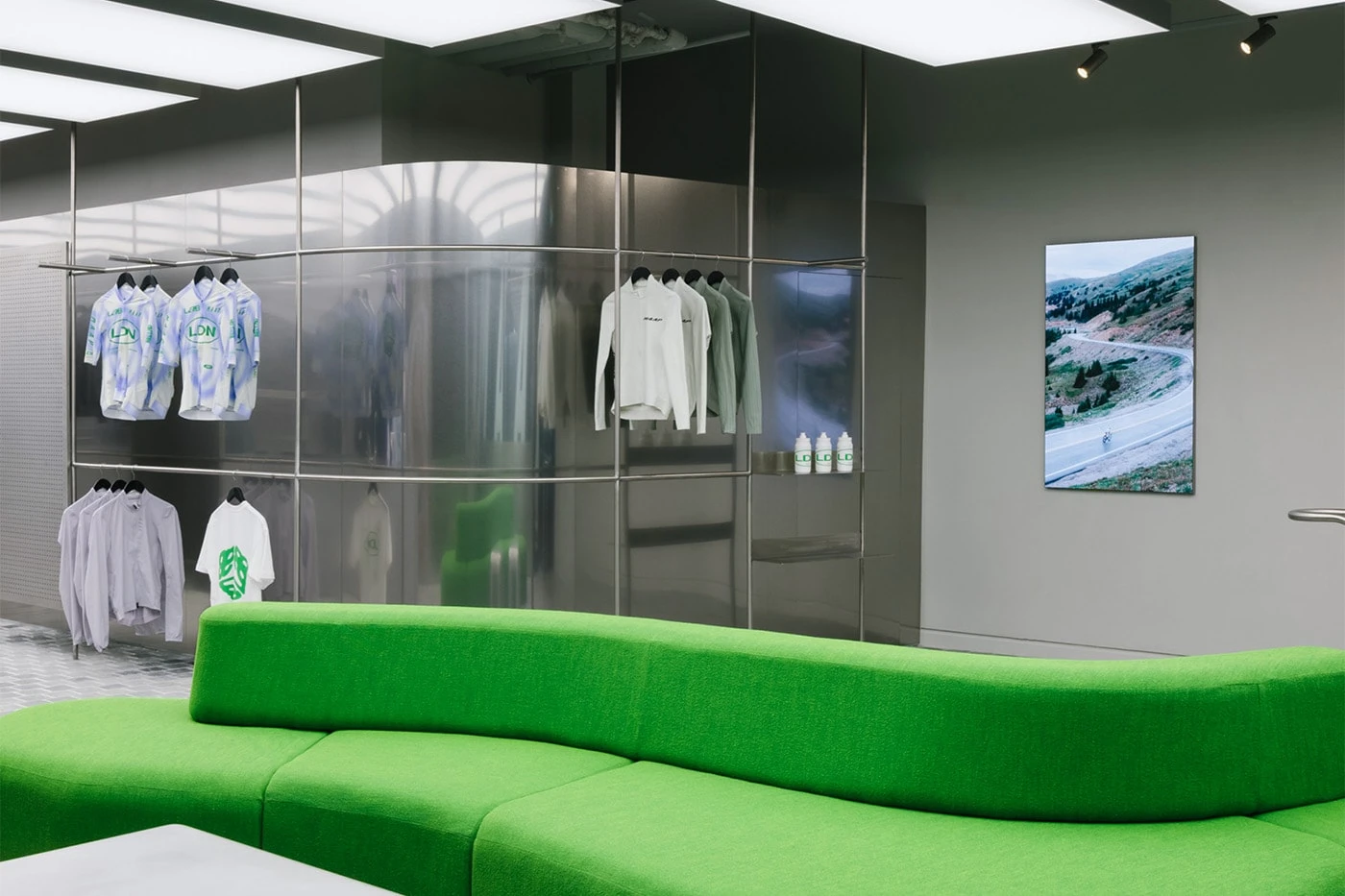
MAAP calls this format LaB, for Life around Bikes, and the Soho shop is the eleventh of them, joining locations already running in Melbourne, Sydney, Los Angeles and beyond. Hypebeast reported the basics directly: Clare Cousins Architects designed the 140-square-meter space, the flagship launches October 10, and it will host community rides alongside retail. None of that is contested. What the brand's own count does, quietly, is put MAAP's physical footprint ahead of most category peers that still sell primarily through specialty bike shops and direct-to-consumer web traffic.
Cycling apparel has historically lived in a narrow lane: technical fabrics, chamois pads, aerodynamic cuts sold to people who already own a road bike worth more than the kit. That lane rewarded specificity. A brand's credibility came from how well it understood watts and seams, not how well its storefront photographed. Eleven stores across four continents is a different kind of credibility, the kind built by Aether, Rapha before it, or Soulcycle merchandise lines: apparel brands that treat the activity as a lifestyle signifier first and a performance category second.
Soho is a telling choice of postcode for that pivot. It's not a cycling neighborhood in the way Shoreditch or Richmond Park might be; it's a retail neighborhood, dense with fashion flagships and foot traffic that has nothing to do with bikes. Opening there signals the brand expects to sell to people who are not already cyclists, using the same tools fashion retail uses: considered architecture, community programming, a launch date timed like a drop rather than a shipment.
The service counter borrowed from a bike mechanic's bench is the clearest evidence of what MAAP is actually selling. A fixture like that only works as a signal if most shoppers walking in never intend to use it for a repair. It becomes décor that gestures at authenticity rather than equipment that gets used, which is exactly the move fashion retail makes when it wants a category to read as lived-in without requiring customers to live in it.
The Georgian brickwork nod outside and the raw steel shelving inside do similar work. Neither detail serves aerodynamics or chamois performance; both serve atmosphere, the same currency Aether and Rapha trade in when they open storefronts. Soho reinforces that reading, since the neighborhood's value to MAAP has nothing to do with proximity to riding routes and everything to do with foot traffic that was never shopping for cycling kit in the first place.
Community rides paired with a launch weekend complete the pattern. Retail built around attendance rather than inventory treats the store as a venue for belonging, not a point of sale for technical fabric. That is the fashion playbook, applied to a category that used to measure credibility in watts and seams.
The store opens as a specialist category, selling itself with the vocabulary of mass fashion retail: an architect credit, a flagship count, a launch weekend built around attendance rather than inventory. Call it a cycling brand that has quietly become a lifestyle chain with eleven addresses and a twelfth almost certainly already on a lease document somewhere.