October 13, 2026. That is the global launch date Le Labo has set for its Holiday 2026 Discovery Sets, a run of miniature bottles built around house names like Santal 33, Another 13, and Thé Noir 29. The brand calls it a Holiday Offering. The mechanics are the same mechanics the brand has used every year since it started shipping seasonal minis: kraft packaging, a personalized seal, a curated selection pulled from the existing catalog rather than any new juice.
Le Labo built its identity on the opposite of a seasonal drop. The brand's founding pitch, dating to 2006, was that every bottle gets hand-blended and labeled at the counter, at the moment of purchase, with the customer's name and the date written on it. That in-store ritual was the entire differentiator against mass fragrance retail. It made every bottle feel unrepeatable.
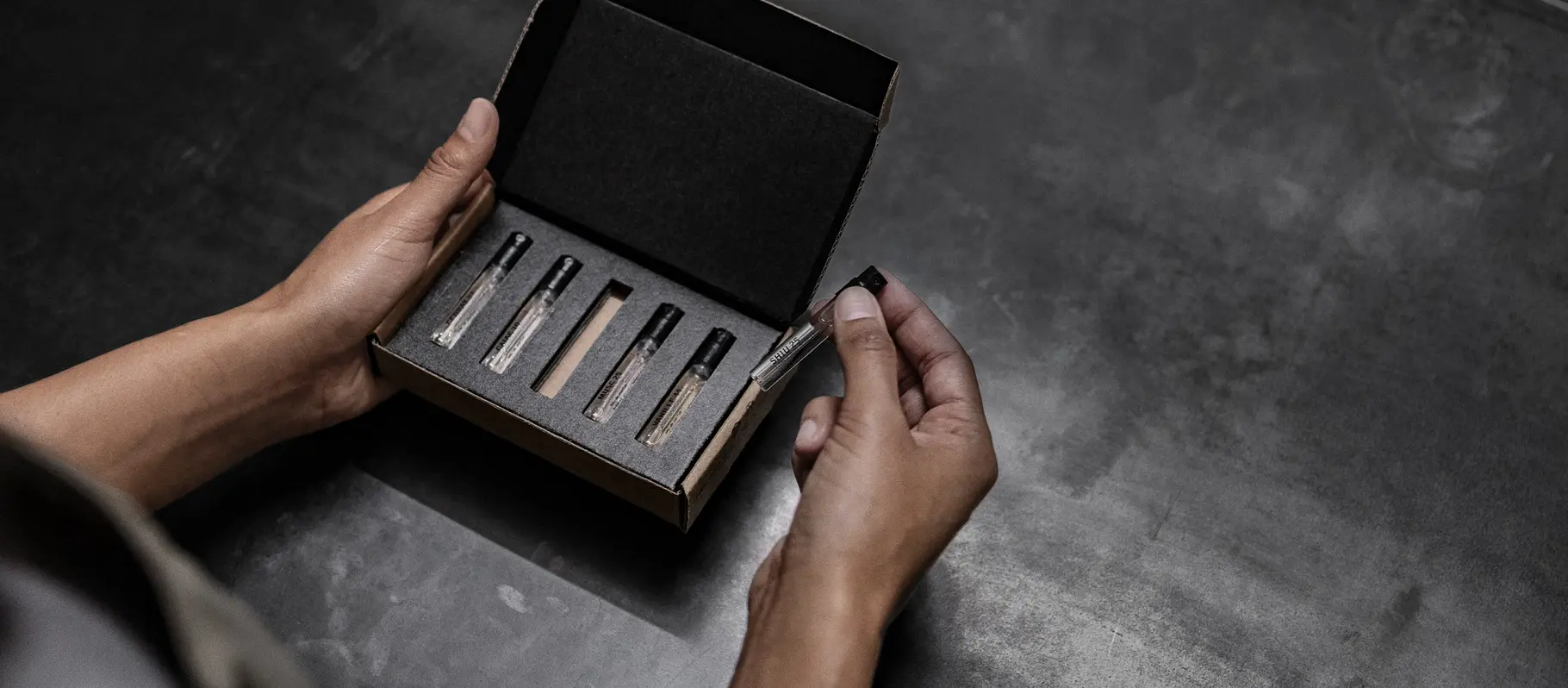
A Discovery Set removes the counter entirely. It is pre-assembled, pre-sealed, sold as a fixed multi-pack through e-commerce and third-party retail alongside every other holiday fragrance bundle on the market. The brand's own marketing language leans into this tension without naming it: Hypebeast quoted the release's framing directly: "positioning its boutique labs as quiet retreats designed to guide the senses through curated fragrance exploration." The boutique is invoked as brand equity even as the product being sold has nothing to do with a boutique visit.
Four years of consecutive Holiday Discovery Sets is not a one-off gift-season sku. It is a fixed annual calendar slot, the same cadence department stores use for perfume advent boxes and gift sets from mass houses like Jo Malone or Diptyque. Le Labo's counter ritual sold scarcity and individuation. Its holiday calendar sells the opposite: a fixed, repeatable, mass-produced object timed to the same October window every competitor in the category uses.
The kraft box and the personalized seal are the tell. Le Labo did not drop the language of the counter ritual when it moved into seasonal sets, it exported that language onto a format the ritual was built to resist. A hand-blended bottle labeled at the moment of purchase cannot also be a pre-assembled multi-pack sitting on a shelf next to Jo Malone and Diptyque gift boxes, yet the marketing keeps calling the labs quiet retreats even as the actual transaction skips the retreat altogether.
What makes the pattern durable rather than accidental is the calendar discipline. A single seasonal set could be dismissed as an experiment or a concession to gift-season demand. A fixed annual slot, repeated on the same October timing every competitor in the category already uses, is a commitment. Le Labo has chosen to run its scarcity story and its mass-market story on parallel tracks rather than pick one, and the fact that neither track has forced a reckoning with the other suggests the contradiction is not a problem the brand is trying to solve.
Both things can be true of the same brand at once, and Le Labo has now run the split for four straight years without resolving it. October 13, 2026 is the fifth data point.