The doughnut case at Krispy Kreme, come August 18, holds a Pikachu with a chocolate-drizzled tail, a Bulbasaur with a green fondant bulb, a Poké Ball split cleanly down its equator in red and white icing. Pre-orders opened five days ahead of release. This is a quick-service restaurant collaboration, plainly: a doughnut chain licensing a video game and anime property for a limited run, the same category of move Krispy Kreme has made with other franchises before. What distinguishes this one is the anniversary attached to it. Pokémon turns thirty this year, and the property has spent three decades moving outward from its original territory, a Game Boy cartridge and a handful of trading cards, into a licensing operation that now touches doughnuts as comfortably as it touches trading card game tins.
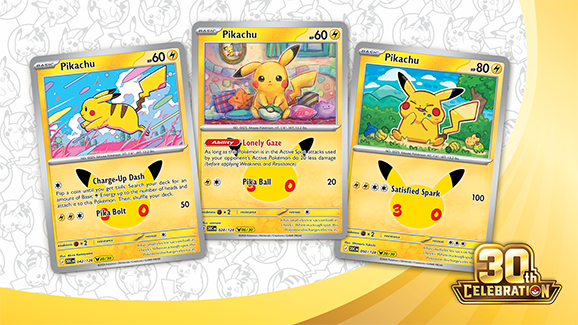
This is licensed food retail, the same shelf category as cereal box tie-ins and fast food toy promotions, and Pokémon has now occupied nearly every rung of that ladder: apparel with Sean Wotherspoon, sneaker collaborations, gachapon capsules at Starbucks Japan, and now doughnuts shaped like starter Pokémon. What was once a specialist property, understood deeply by people who played the games and traded the cards, now arrives pre-flattened into mass grocery and quick-service vocabulary, requiring no familiarity with the source material to purchase or consume.
The six characters chosen for the collection are not an arbitrary set. Pikachu, Bulbasaur, Charmander, Squirtle, and Jigglypuff are the roster a person who has never touched a Pokémon game would still recognize on sight, pulled from the original 1996 line-up rather than any of the newer generations the franchise has released since. Thirty years of expansion, hundreds of new species, and the anniversary campaign still reaches back to the same six faces it started with. That is not an accident of doughnut design. It is the franchise's own admission that its widest recognition still lives in its oldest material.
Consider what the doughnut case is actually standing in for. A trading card binder demanded that a person learn a roster, understand a battle system, and build some fluency before the object made sense at all. A doughnut asks nothing of the kind. It sits behind glass, shaped like a bulb or a tail or a ball split into red and white, and it is legible to someone who could not name a single generation released after the original line-up. The franchise has not translated its depth into a new format so much as set that depth aside in favor of a shape anyone can recognize.
That trade-off is the real subject of the anniversary campaign, more than the doughnuts themselves. Sneaker collaborations, apparel lines, gachapon capsules, and now pastries are all versions of the same maneuver: take a property built on specialist knowledge and strip that knowledge requirement away entirely, leaving only the silhouette behind. The thirty-year milestone becomes an occasion to repeat the maneuver once more, this time on a doughnut case, and to do it with the same six faces the franchise has always reached for when it wants to be understood by everyone at once rather than known deeply by anyone in particular.
A collaboration like this belongs to the same shelf as the cereal box toy and the fast food kids' meal, a doughnut case standing in for what a trading card binder used to do.