
The dial is violet, deep enough to read as almost black under overhead lighting, with a shimmer that IWC says is drawn from the orchid found across Singapore, host city of the Grand Prix this watch is timed to precede. The case is grade 5 titanium, light enough for a pit crew engineer to wear through a six hour shift without noticing the weight. A thin green line runs across the subdial, the exact green of the Petronas logo, placed with the same discipline a kit supplier places a sponsor patch. This is watchmaking that has adopted the visual grammar of team merchandising without calling itself that.

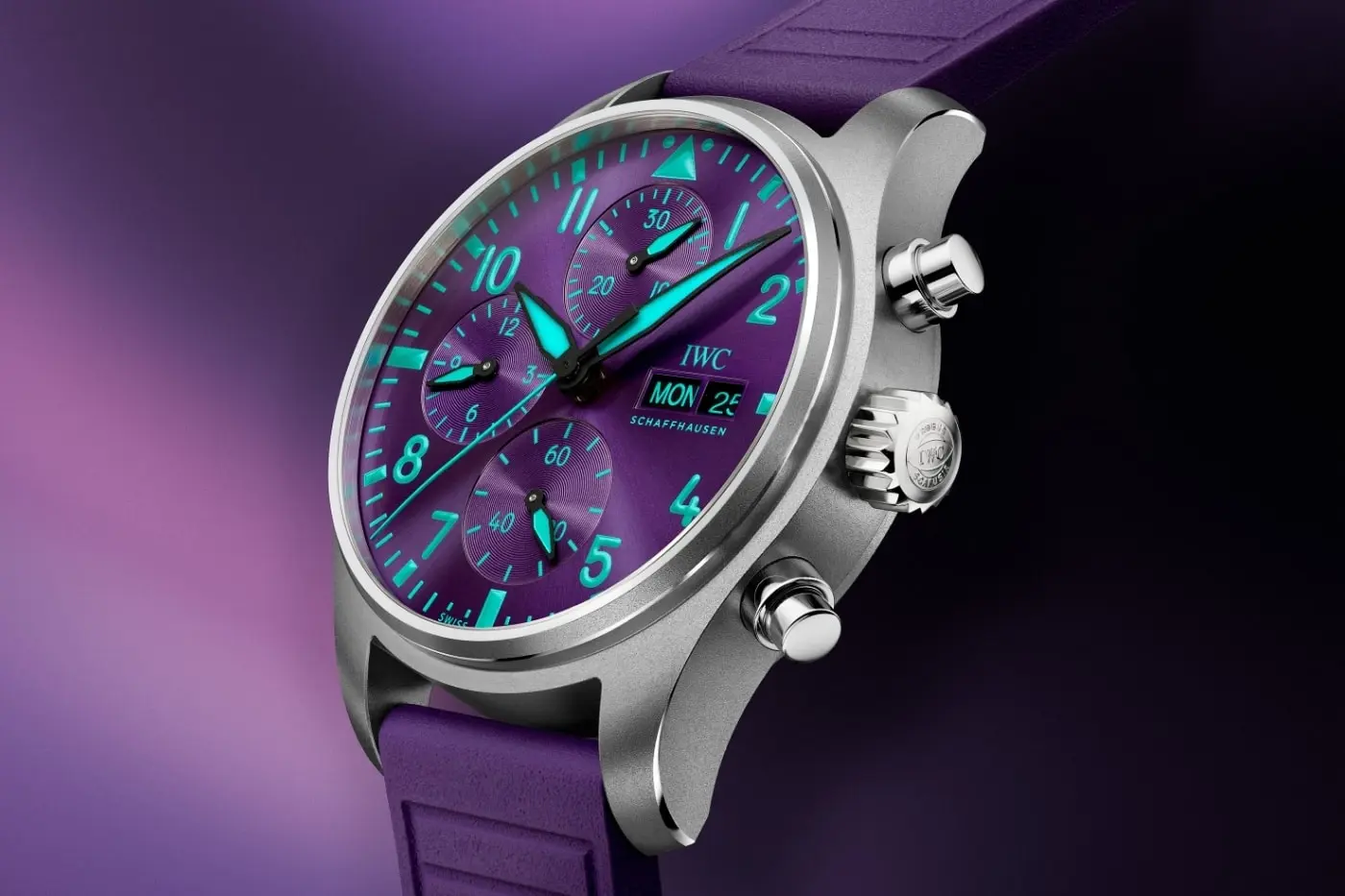
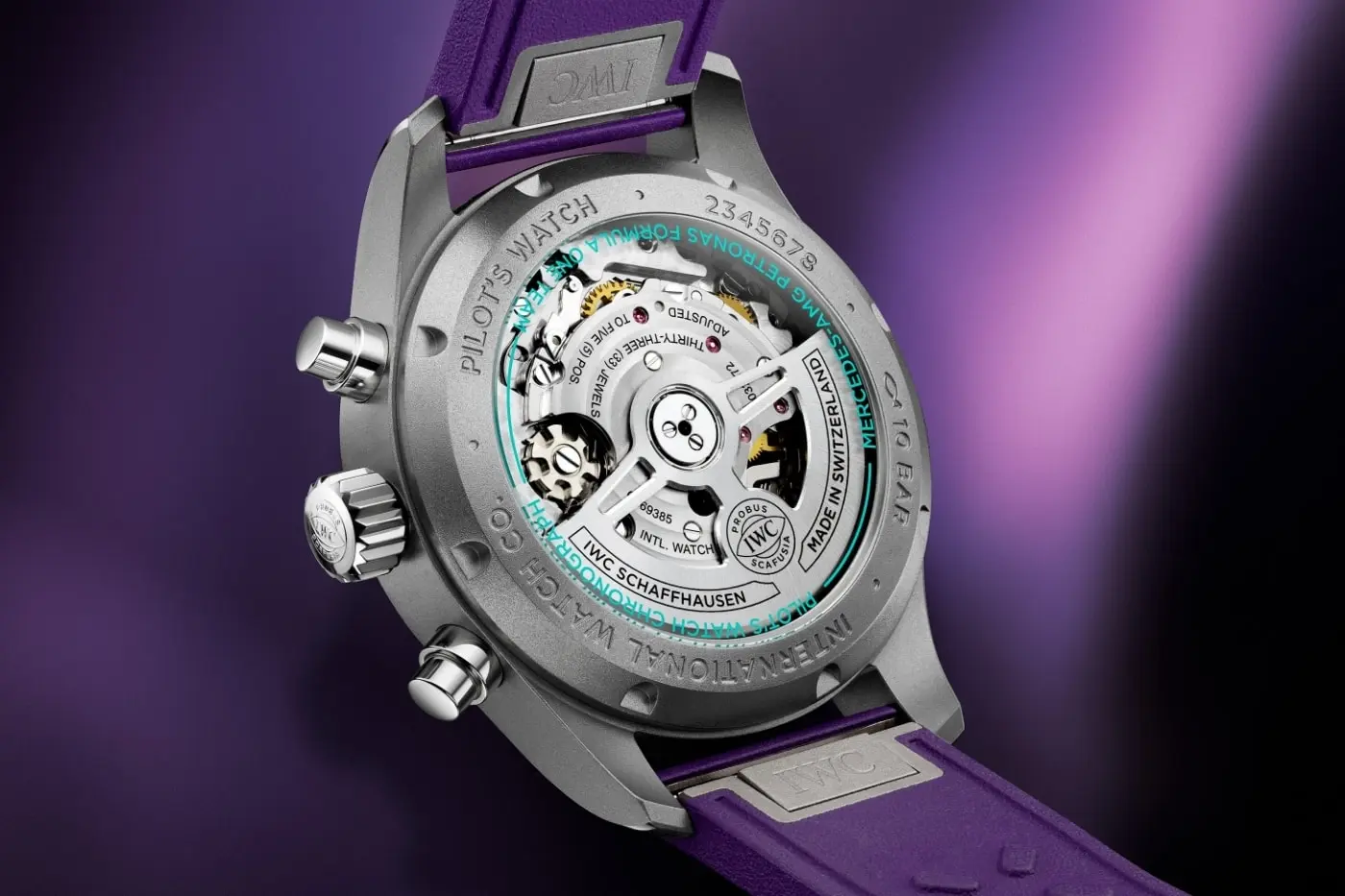
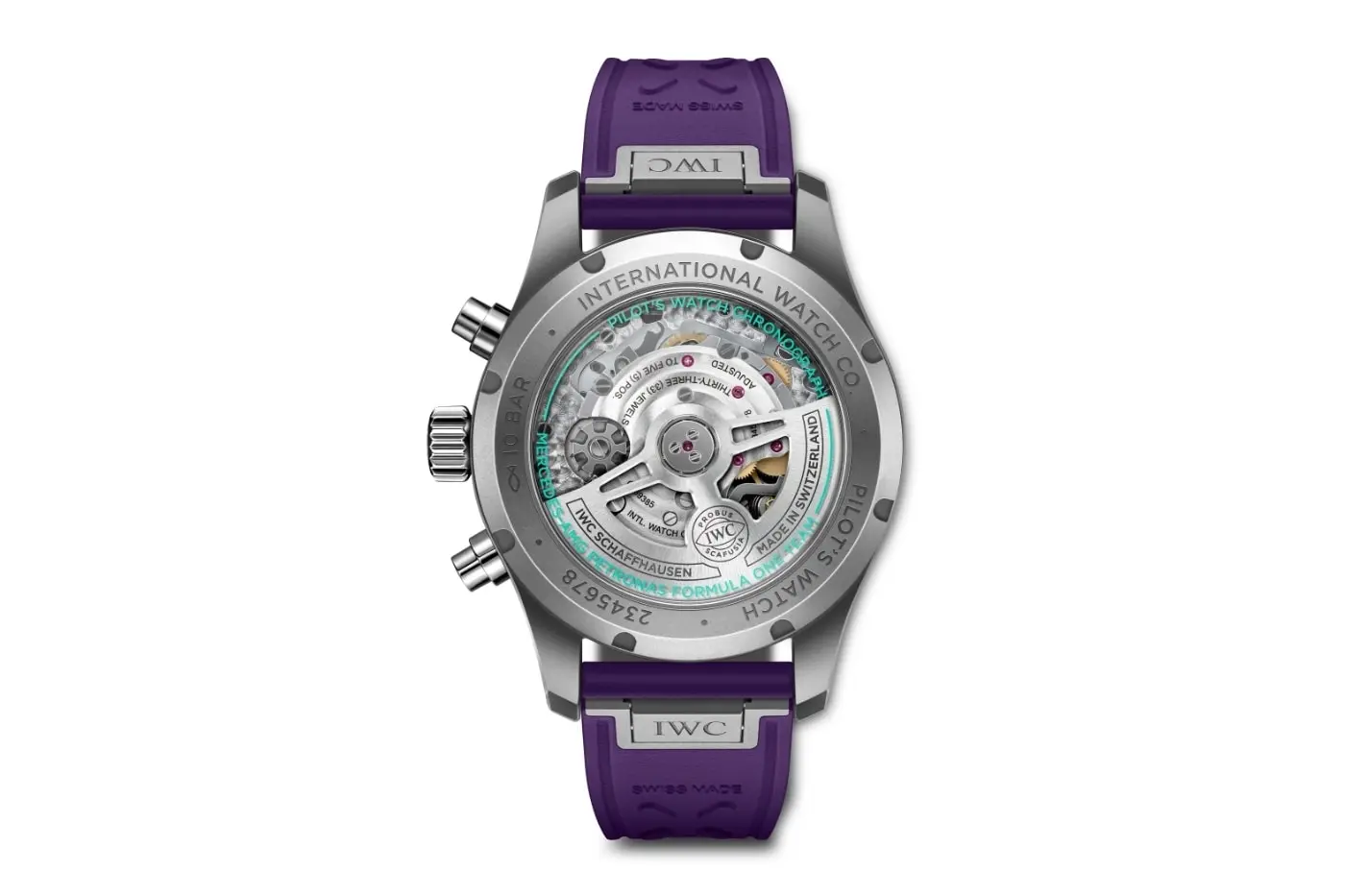
IWC calls this its fourth official team watch made for the trackside staff themselves, not for the drivers, not for a red carpet ambassador. The people this watch is engineered around are mechanics and engineers standing in a garage bay, the crew who never appear on a broadcast unless something has gone wrong with the car. Fourteen years into the partnership, IWC is still building product around the least photographed people on the grid, and pricing that decision as a limited release rather than a mass line.
What is happening here belongs to the same shelf as a streetwear label numbering its collaborations: a fine watchmaker treating a motorsport partnership less like a sponsorship and more like a running collection with its own internal continuity, colorways tied to specific races, drops timed to a calendar the way a footwear label times a season. The orchid dial exists because Singapore exists on the calendar this September, the same reasoning a sneaker brand uses when it ties a colorway to a stadium city. High horology has quietly become release-driven.
Consider what the caliber inside actually does. A chronograph exists to measure elapsed time with precision, a function pit crews need for real reasons, tire changes and fuel strategy windows measured against a stopwatch. IWC has not stripped that function out to make room for the branding exercise. The green line on the subdial and the orchid-derived dial color sit alongside a genuinely engineered tool, which is what separates this from a pure merchandising play even as it borrows merchandising's rhythm.
The titanium case choice reinforces the same point from another angle. A garage engineer does not choose a dress watch for a six hour shift, and IWC did not build one. Grade five titanium is a material decision aimed at the wearer's actual working conditions, not at how the watch will look in a lifestyle photograph. That the watch is aimed at mechanics rather than drivers is itself the tell: the choice to build for the least photographed people on the grid, race after race, only makes sense if the brand believes the tool itself has to hold up, not just the story around it.
Put those two facts together and the capsule drop framing gets more interesting rather than less. A streetwear label chasing a release calendar rarely bothers with mechanical substance underneath the colorway. IWC has kept both: the seasonal, city-tied dial story and the actual chronograph engineering a trackside crew would use. Fourteen years of continuity with one team is what let that combination become routine rather than a one-off stunt.
This is a watch built for a garage, priced like a boutique piece, and marketed like a capsule drop. Fine watchmaking now runs on streetwear's release cadence, and IWC is fourteen years into proving it.