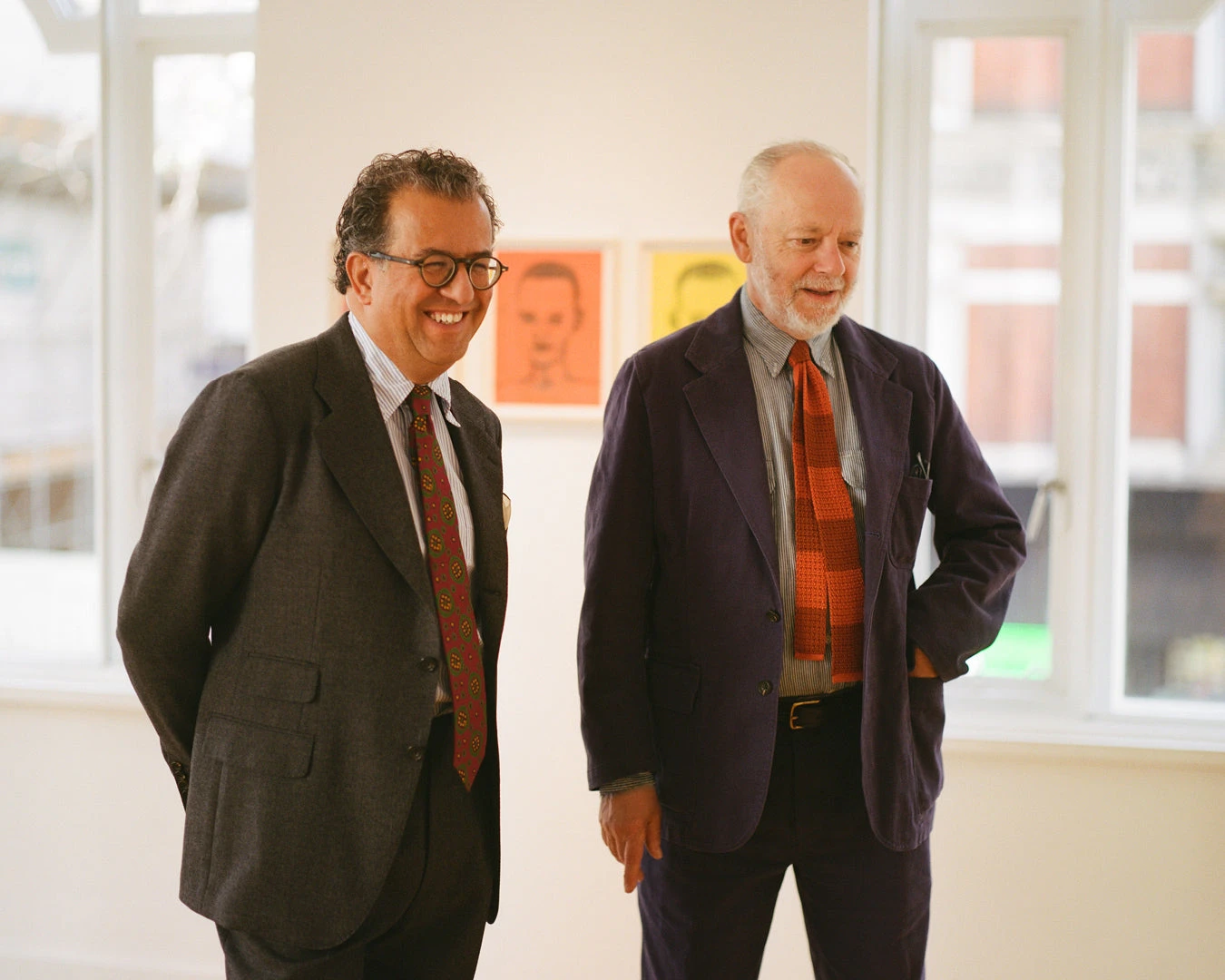
The table at the French House is long and scuffed, the kind of surface that has absorbed forty years of spilled Burgundy and better conversation than the room's size suggests. Drake's sat novelist Hisham Matar and painter David Austen at it this week, two friends of two decades, to mark the opening of an exhibition pairing Matar's writing with Austen's paintings. The brand photographed the lunch, wrote it up as editorial, and published it on its own site under the same banner it uses for lookbooks and knitwear guides.
This is not new territory for the label. Drake's has spent the better part of two years turning its blog into something closer to a small cultural magazine than a seasonal catalogue, running sit-downs with gallery owners, photographers, and now, pairs of artists marking their own shows. The pattern has a name even if Drake's does not use one: the brand functions less like a clothing company issuing lookbooks on a delivery schedule and more like an arts quarterly that happens to also sell ties.
What makes this install different from a straightforward collaboration is the absence of product. There is no Drake's capsule tied to Matar and Austen's exhibition, no jacket named after a painting, no scarf printed with a line from Matar's memoir. The commercial logic that usually justifies a menswear house talking about outside culture, that the conversation exists to sell a garment, is simply not present here. The lunch is the content. The clothes the two men wear in the photographs are incidental, not even specified in the copy.
That absence is the tell for what has actually shifted. A label spending editorial real estate on a lunch with no attached product is treating its audience less as customers waiting for a drop and more as readers waiting for the next dispatch. Vogue runs profiles to sell subscriptions and advertising pages; Drake's runs profiles to sell the idea that the brand itself has the same taste-making authority as the institutions it covers, without ever running the exhibition itself or publishing the writer's book. It borrows the credibility of the literary and gallery world by proximity, not by participation.
Menswear houses have always used culture as a backdrop, campaign shoots in museums, lookbooks styled against bookshelves. What Drake's is doing goes a step further: the culture is the entire post, dressed in the visual grammar of the brand's owned channel rather than a press release about a sponsorship. The exhibition belongs to Matar and Austen. The framing of it as a Drake's story belongs entirely to Drake's. At this point the brand's blog reads less like marketing collateral and more like the house organ of a small, well-dressed literary salon, and that is the category it now occupies.