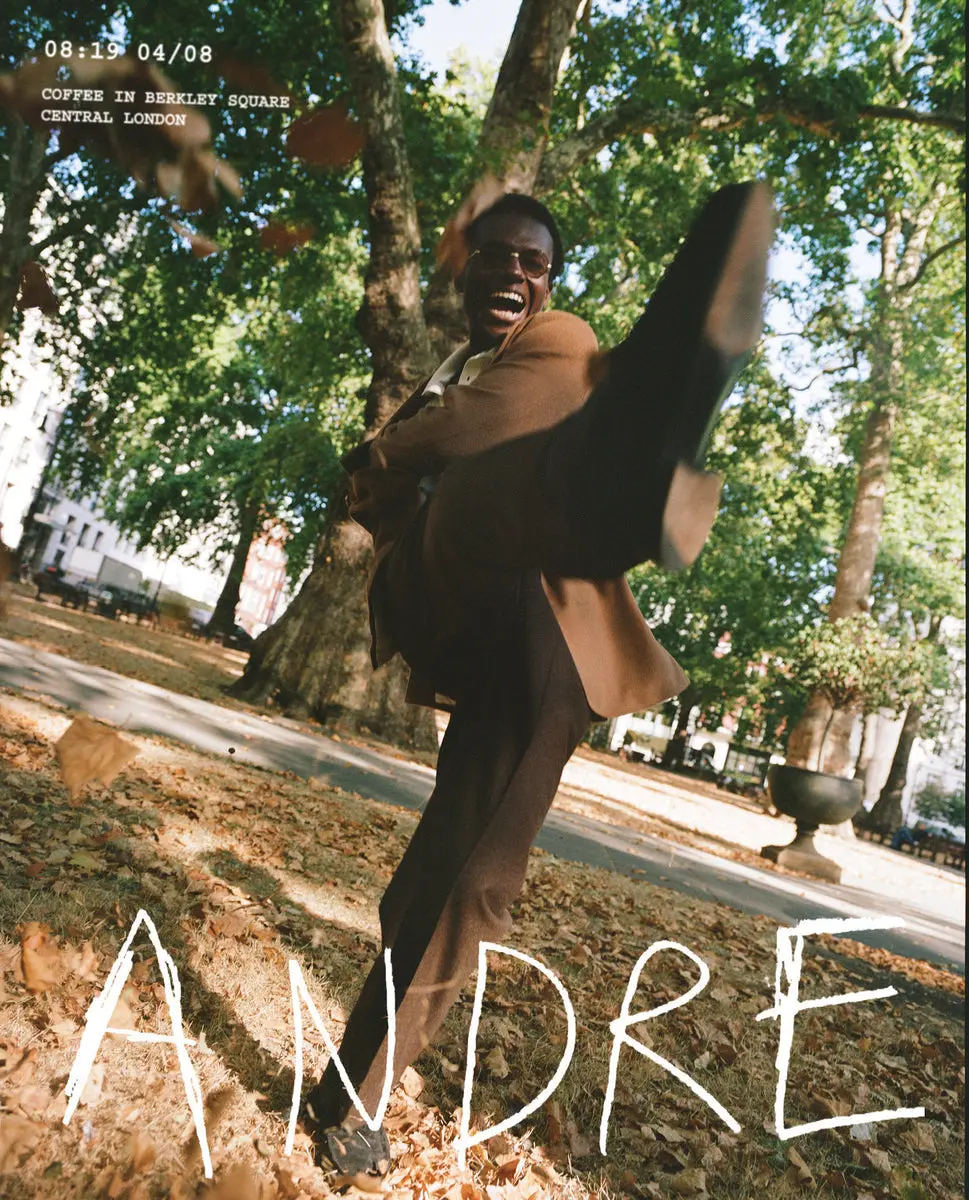
The lookbook opens on a tan overcoat against a wet London pavement, the kind of grey light that only reads as autumn if you already know the city's weather by feel. Drake's calls the collection, in its own copy, 'a celebration of our hometown, London, and everything in it we find inspiring,' and the garments that follow, checked wool jackets, knit ties, heavy cotton shirting, are staged less like product and more like postcards home.
Six days earlier, the same brand published a different story: a Savile Row tailor's trip to watch FC Tokyo play Tokyo Verdy, an afternoon at a football derby it holds no stake in, framed as a chance to watch London's tailoring language land somewhere unfamiliar. Two stories, one week apart, both built around place rather than product. The Tokyo piece exported London's sensibility outward to Japan. The Autumn lookbook turns around and re-imports it, selling the hometown itself back to a customer who most likely encounters Drake's tailoring through an e-commerce checkout in Los Angeles or Seoul, not a fitting room on Clifford Street.
This is menswear retail using travel writing as a delivery mechanism for wool. The category Drake's occupies now sits closer to a lifestyle magazine with a shop attached than a tailor with a newsletter, and the locality angle does real work: it lets a brand whose actual product is expensive, slow-made clothing compete for attention against streetwear labels that move faster and louder, by offering something streetwear generally does not, a coherent sense of where the thing came from and who wears it there.
Consider what each story actually sells. The Tokyo Derby piece has no product shots doing heavy lifting, it has a Savile Row tailor standing in a foreign stadium, and the transaction being offered is proximity to a sensibility rather than a garment. The Autumn Collection reverses the camera but keeps the same transaction: the tan overcoat on the wet pavement is not competing with other overcoats, it is competing with other atmospheres. The wool checks and knit ties are almost incidental to the copy's real claim, which is that London itself, as a feeling, is the thing for sale.
That reversal is the tell. A brand confident in its clothing lets the clothing carry the story. A brand that instead sends a tailor abroad to prove the hometown travels, then turns home again to prove the hometown still means something at home, is building a case for itself rather than for a coat. The customer in Los Angeles or Seoul checking out online is not being asked to evaluate stitching, they are being asked to buy into a place they will never live in, twice in one month, from two different angles of the same lens.
What is notable is the frequency, not the theme. A single hometown story from a heritage tailor reads as brand voice. Two placed six days apart, one exporting London outward and one importing it back to sell a seasonal drop, reads as an actual editorial calendar, a magazine's cadence borrowed by a clothing company that used to publish a lookbook twice a year and call it done. Drake's has become a small publishing operation that happens to sell overcoats, and the overcoats are no longer the part doing the talking.