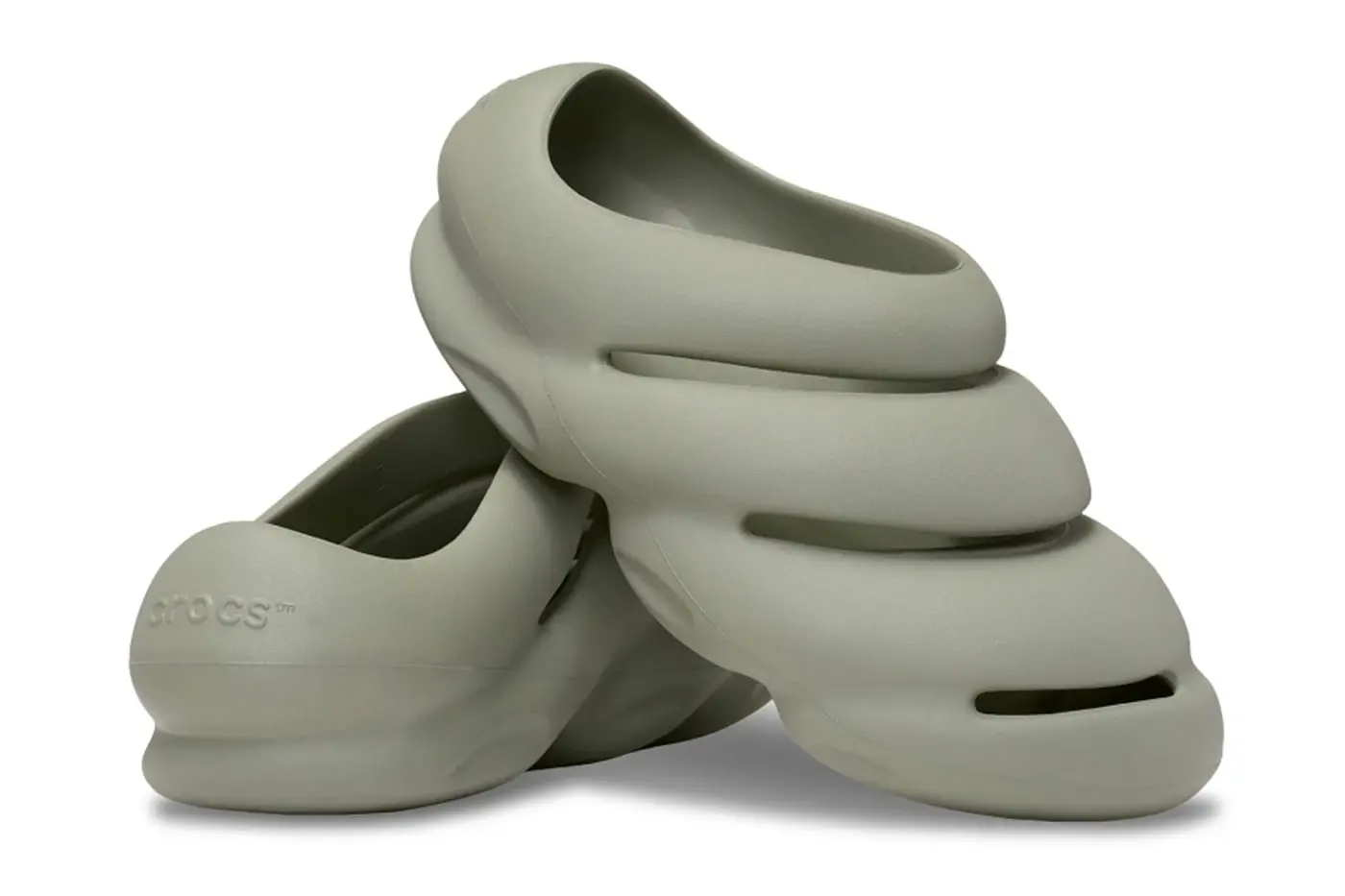
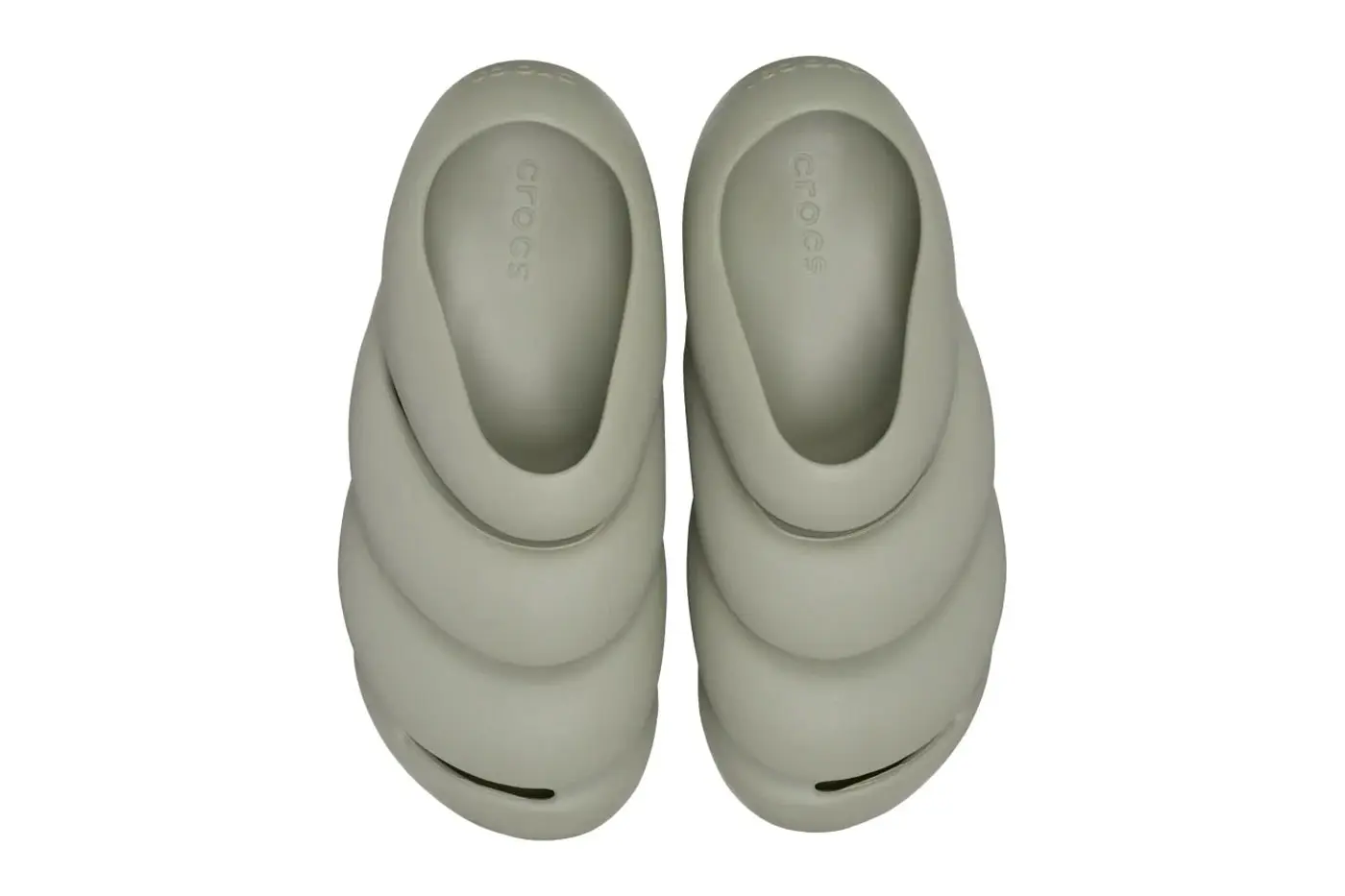
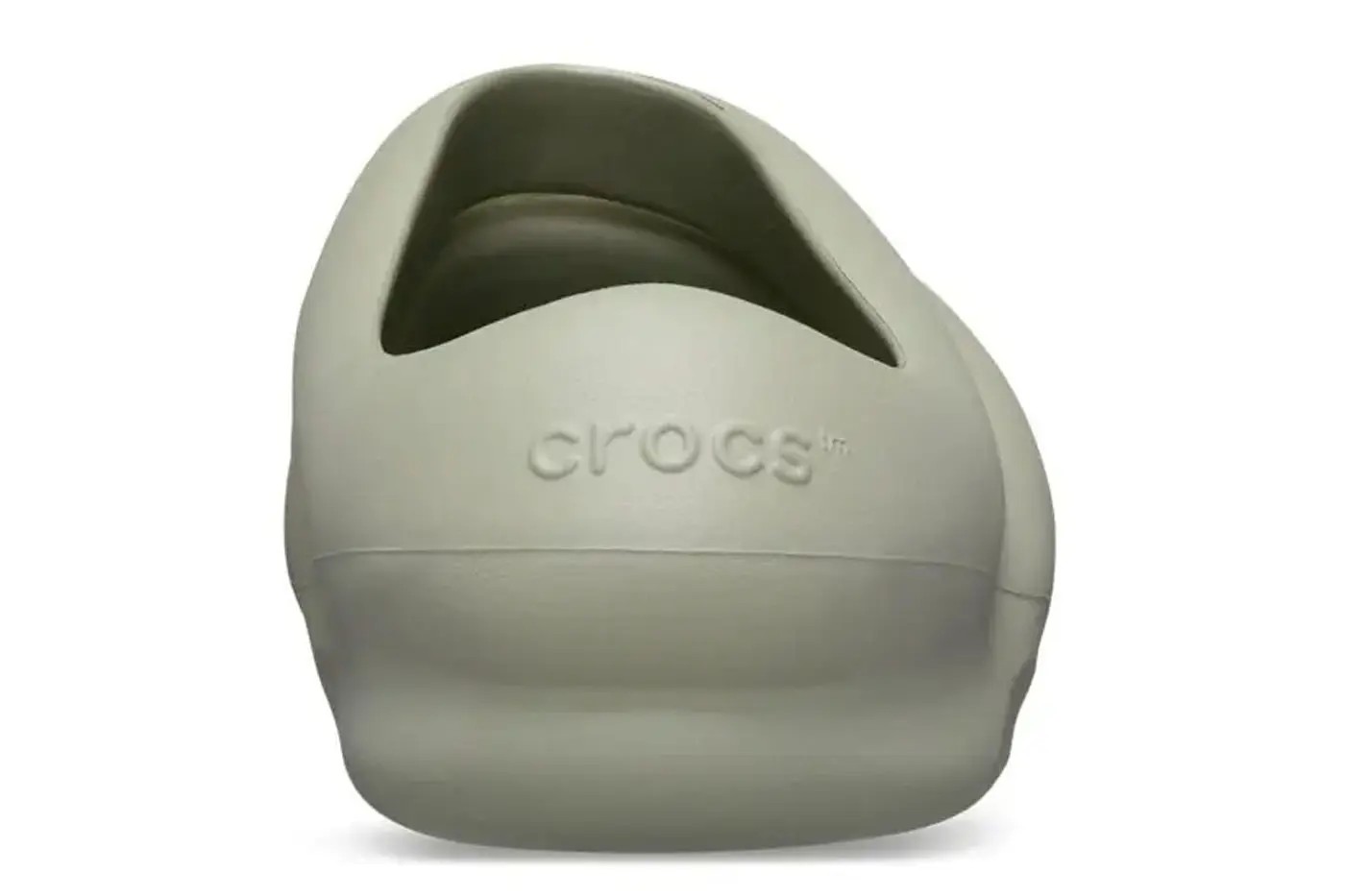
You have seen this shoe, or something close to it, on a design forum render. A molded slip-on with integrated flex grooves, no exposed stitching, a single-shot foam construction that eliminates the seams where most footwear fails. Steven Smith, the designer who built Reebok's Instapump Fury and New Balance's 997S, created the ROY for Crocs' Creative Innovation Team. The silhouette releases in an Elephant colorway on 7 August 2026 at $80.
The mechanism that converts presence to preference here is authorship. Crocs has spent five years building collaborator credibility through partnerships with Balenciaga, Salehe Bembury, and Justin Bieber's Drew House. Each collaboration reframed the clog as a canvas rather than a punchline. The ROY extends the logic: instead of dressing up the Classic Clog, Crocs commissioned an entirely new silhouette from a designer whose resume reads as sneaker-industry canon.
The price point is the tell. At $80, the ROY sits below most technical foam runners. Salomon's RX Moc 3.0 retails at $130. Merrell's Hydro Moc drifts between $55 and $75 depending on colorway. The ROY's positioning suggests Crocs is targeting volume rather than scarcity, betting that Smith's name and the silhouette's visual distinction will drive sell-through without limited quantities.
Smith's hiring signals a structural shift in how Crocs conceives product. The Instapump Fury and the 997S both became reference points for an industry that worships archival legitimacy; attaching that pedigree to a foam slip-on reframes the ROY as sneaker-adjacent rather than sandal-curious. The move borrows from the playbook Salomon and Merrell have run for years, translating trail and recovery footwear into streetwear grammar. Crocs is now competing on that turf, and Smith's name is the entry credential.
The Elephant colorway underscores the intent. Neutral, grayscale, devoid of the neon punch that defined the Classic Clog's meme-era resurgence, the debut palette courts the same consumer who gravitates toward Salomon's earth tones and Merrell's muted options. Crocs is not chasing virality here; it is chasing wardrobe permanence, the kind of quiet ubiquity that sustains margin after the hype cycle exhausts itself.
The Bembury Pollex Clog sold out repeatedly and generated a resale market that validated Crocs' collaborator strategy. The ROY is not a collaboration in the same sense; it is an in-house design with a credited author. By mid-September 2026, the restock cadence and StockX bid-ask spread will reveal the outcome. Crocs has placed its bet: the brand now sells silhouettes, not just clogs.