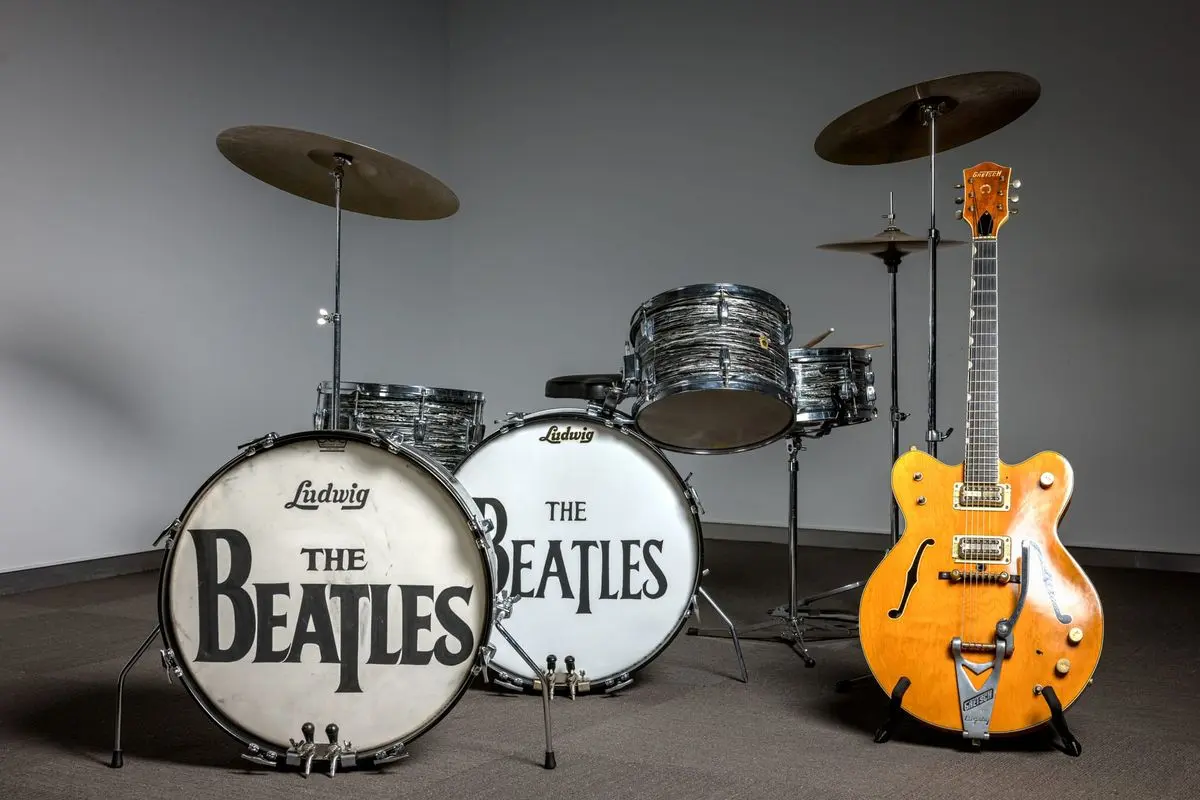
Christie's announced a new department this week. The house is calling it Pop Culture, built to court millennial and Gen Z buyers with sales of memorabilia, collectibles, and culture-adjacent objects. The announcement frames this as expansion into new territory.
The record says otherwise. In March 2026, Christie's sold drum kits belonging to Ringo Starr alongside Lennon-era Gretsch guitars, part of a rock memorabilia sale that drew significant press and six-figure hammer prices. That sale did not run under a Pop Culture banner. It ran as a standard auction event, filed under the house's existing categories for collectibles and music history.
The gap between the announcement and the operational record is six months, at minimum. Christie's did not begin selling Beatles memorabilia, sneaker collections, or pop ephemera this week. It began publicizing a formal container for sales it was already running. The house's own language calls this a launch. The auction catalog from March calls it business as usual.
This pattern is not unique to Christie's. Institutions frequently name a category after the market inside it has matured, not before. Sotheby's ran a standalone streetwear and sneaker department years after individual sneaker lots had already cleared five and six figures at its general sales. The naming event is rarely the starting point. It is closer to a ratification, arriving once the internal sales data has already made the case.
What the division actually changes is marketing language and staffing, not the underlying buyer base. The buyers who paid for the Ringo drum kits in March did not wait for a division name to bid. They were already Christie's clients, already comfortable spending auction-house money on music history. The new department gives Christie's a public-facing story for a segment of its own client list that has existed on the books for longer than the announcement lets on.
The Ringo drum kits and the Lennon-era Gretsch guitars did not need a department name to attract press attention or hammer prices well beyond estimate. The interest was already there, sitting inside a category labeled collectibles and music history, doing the work that the new division now claims credit for. A department name does not create bidders. It gives an existing bidder pool a banner to stand under.
Sotheby's streetwear and sneaker example makes the same point from a different house. That department also arrived after individual lots had already proven themselves at general sales, not before. The sequence favors data over vision: the sales happen, the revenue clears, and only then does the institution reach for a name that makes the pattern look intentional from the start.
Christie's own language, calling this a launch, does the most revealing work here. A launch implies a beginning. The March sale is the evidence that the beginning happened earlier, under a different filing, without the marketing frame now attached to it. The department is real. The origin story attached to it is not.
Christie's dated the division's launch to 24 September 2026. The March 2026 rock memorabilia sale predates it by six months.