
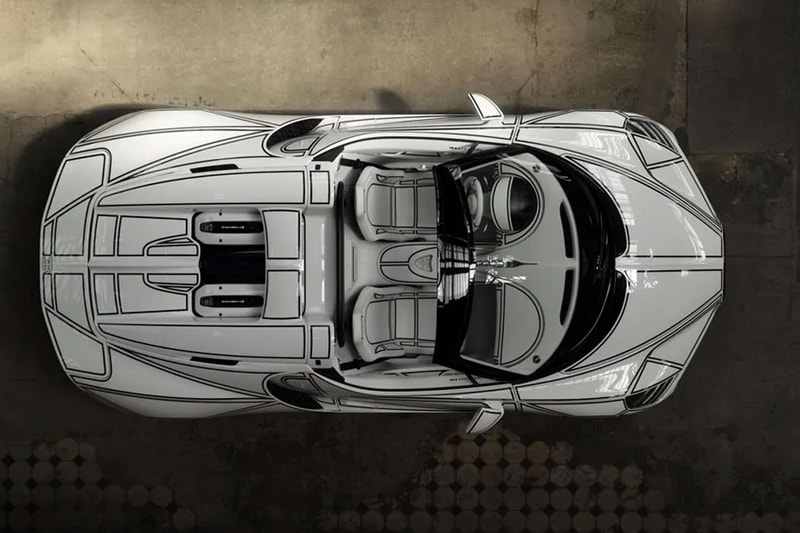
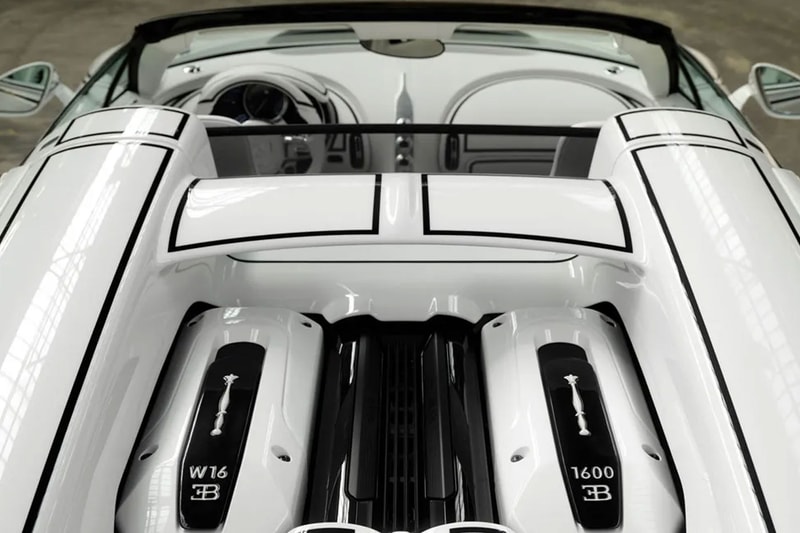
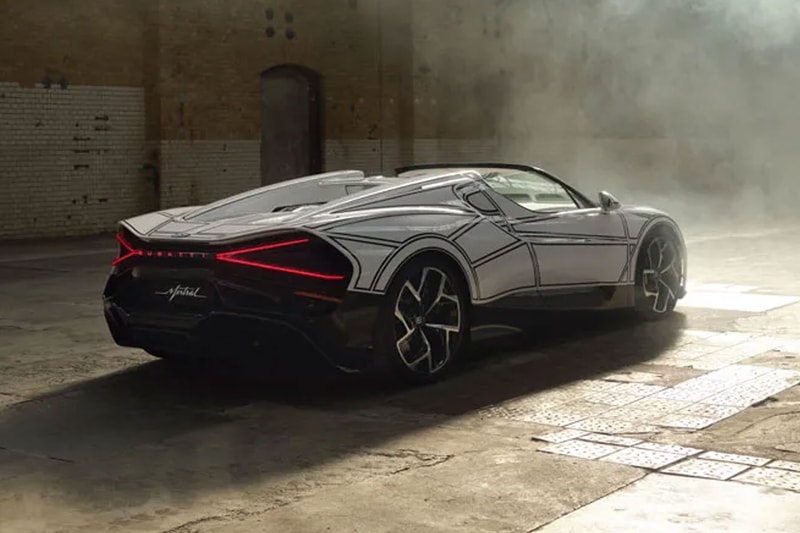
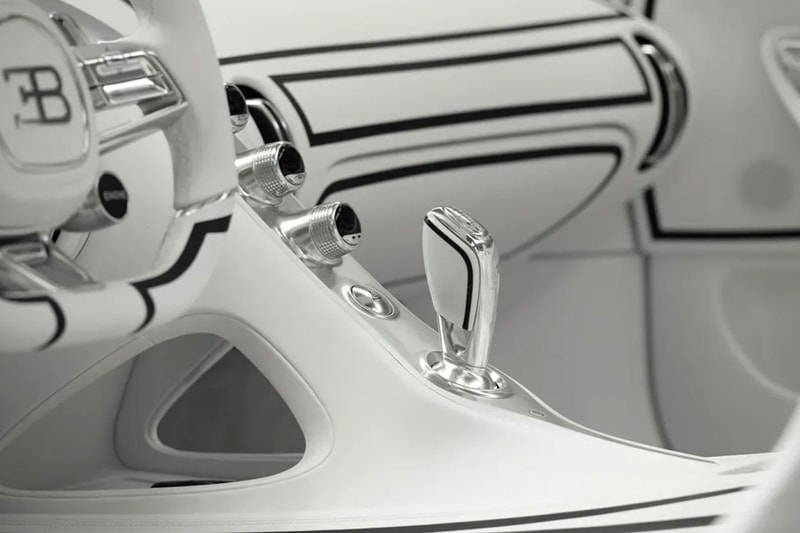
Bugatti's Sur Mesure division has revealed the W16 Mistral Blanc Éternel, a one-of-one hypercar built in collaboration with Königliche Porzellan-Manufaktur Berlin. The vehicle incorporates real porcelain components across its exterior and interior trim, featuring hand-masked black geometric linework on a white base. The design framework carries a specific lineage: the 2011 Veyron Grand Sport L'Or Blanc, the last time Bugatti and KPM worked together on a production vehicle.
Fifteen years is a long interval for a sequel. In that span, the hypercar market has undergone multiple generational shifts. Electrification has moved from novelty to expectation. Rimac acquired Bugatti through a merger with Porsche in 2021. The customer base for seven-figure automobiles has rotated substantially, with new wealth from technology and cryptocurrency entering a market previously dominated by industrialist families and Gulf state collectors.
The Blanc Éternel does not address any of these shifts. It addresses 2011 directly. The porcelain collaboration format, the white-and-black colorway, the emphasis on handcraft from a heritage German manufacturer: these are the exact coordinates of the L'Or Blanc. The new vehicle is faster, more refined in its production techniques, more expensive by a margin Bugatti has not disclosed. But its cultural proposition is unchanged.
This is the craft revival loop operating at its most explicit. A luxury house identifies a successful moment in its archive. It waits long enough for the original audience to age into nostalgia and the new audience to encounter the reference fresh. It rebuilds the proposition with updated specifications but identical positioning. The 2011 collaboration earned significant press coverage and established porcelain as a viable material story for hypercars. The 2026 version seeks to repeat that cycle.
Whether the repeat lands depends on factors the original did not face. The 2011 announcement arrived in a media environment where a single hypercar reveal could dominate automotive coverage for weeks. The 2026 version enters a feed environment where attention disperses within hours. The porcelain story must compete not only with other Bugatti announcements but with the entire velocity of the luxury conversation.
KPM's participation represents its own continuity. The Berlin manufactory has operated since 1763, surviving wars, regime changes, and multiple ownership structures. Collaborating with Bugatti on a fifteen-year interval is, by KPM's standards, a brief pause. The porcelain-making vocabulary the partnership employs has remained stable for centuries. The hand-masking technique that produces the Mistral's geometric linework descends directly from methods developed for Prussian royal commissions.
What drifts is not the craft. What drifts is the context around it. Bugatti in 2011 was an independent Volkswagen Group asset with a clear position as the performance ceiling of road-legal automobiles. Bugatti in 2026 is a Rimac subsidiary navigating the transition to hybrid and electric powertrains while maintaining its combustion heritage for existing customers. The W16 Mistral is the final chapter of the naturally aspirated W16 engine program. The porcelain, in this light, reads as memorial as much as celebration.
The one-of-one format ensures the Blanc Éternel will find its buyer. Sur Mesure commissions at this level are typically spoken for before announcement. The cultural work the vehicle performs is less about sales than about narrative maintenance: Bugatti can still do this, the collaboration implies. The craft network remains intact. The customer who wants a porcelain hypercar in 2026 can have one, just as the customer who wanted one in 2011 could. The loop closes.