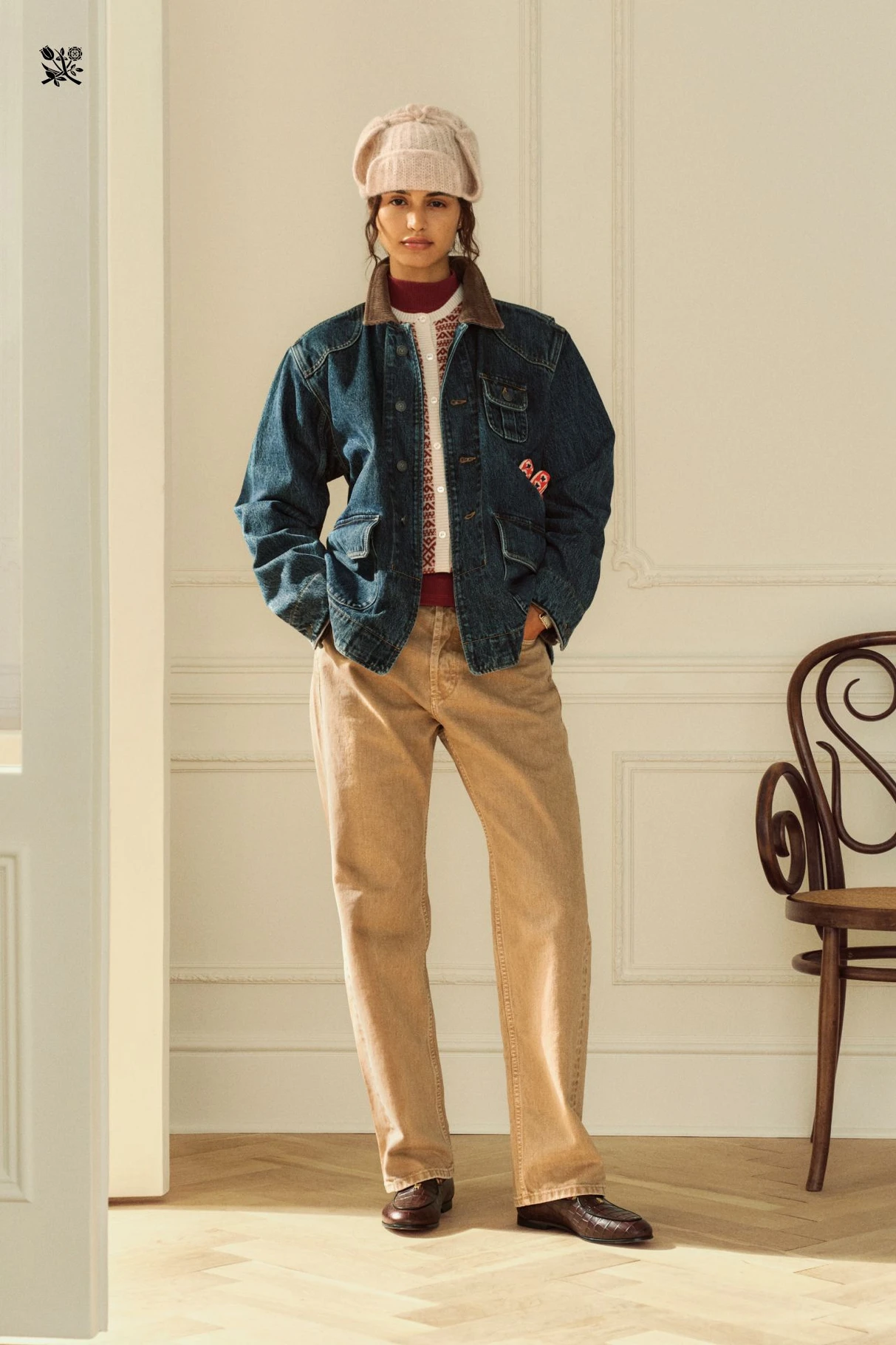
A cream wool coat sits buttoned to the collar in the lead image of Aimé Leon Dore's Fall/Winter '26 Women's Collection, posted to the brand's own site on 29 October. Behind it, a rack of knitwear in the brand's familiar muted palette: oatmeal, hunter green, the kind of tailored neutrals that have defined the label's menswear since its first downtown drops a decade ago. The difference this time is structural, not visual. This collection is not a women's capsule folded into a men's delivery calendar. It is its own release, with its own cover image, its own page, its own cadence inside the brand's seasonal rhythm.
For most of Aimé Leon Dore's history, women's product arrived as an adjunct: sized-down pieces from the men's line, the occasional standalone editorial shot on a woman wearing the same season's menswear, a handful of SKUs that existed because retailers asked for them. This fall, the label gave the women's line its own look and its own article, running knitwear, tailoring, and outerwear as a self-contained story rather than a sidebar to delivery one or delivery two of the men's assortment, which is this label's actual unit of measurement for a season.
This is menswear retail logic meeting womenswear retail logic, and the brand is visibly still deciding which rules apply. The emphasis on knitwear, tailored garments, and cold-weather outerwear tracks the same seasonal vocabulary the brand uses for men: rich texture, considered layering, pieces built to be worn for years rather than one season. There is no attempt to invent a separate aesthetic language for women's product. The collection borrows the menswear brand's entire design grammar and simply resizes the silhouette.
What makes this dateable as a shift rather than a routine drop is the sequencing. Aimé Leon Dore has run a women's capsule before, in spring, but framed it explicitly as a capsule: smaller, later, clearly secondary. This fall delivery arrives inside the brand's main seasonal push, publicized with the same blog infrastructure the brand uses for its marquee men's deliveries and its automotive and institutional collaborations.
The sequencing detail matters more than the garments themselves. A spring capsule that arrives smaller and later than the men's drops signals a line still being tested. A fall delivery that runs inside the brand's main seasonal push, using the same blog infrastructure as the marquee men's deliveries and the automotive and institutional collaborations, signals a line the brand now treats as core inventory rather than overflow.
That the collection borrows the menswear design grammar wholesale, rather than inventing a separate aesthetic language, says something about how the brand is managing this transition. Resizing the silhouette instead of rebuilding the vocabulary keeps the women's line legible to the same customer who already understands the brand's muted palette and its preference for pieces built to last beyond one season. The risk of that approach is that women's product never develops an identity distinct from the men's calendar it was once merely attached to.
Still, the structural change is the story. Retailers and customers now have a standalone page, a standalone cover image, and a standalone cadence to point to, which is a different thing entirely from sized-down pieces added to satisfy retailer requests.
Aimé Leon Dore's women's line has moved from accessory status to its own category inside the brand's retail calendar.