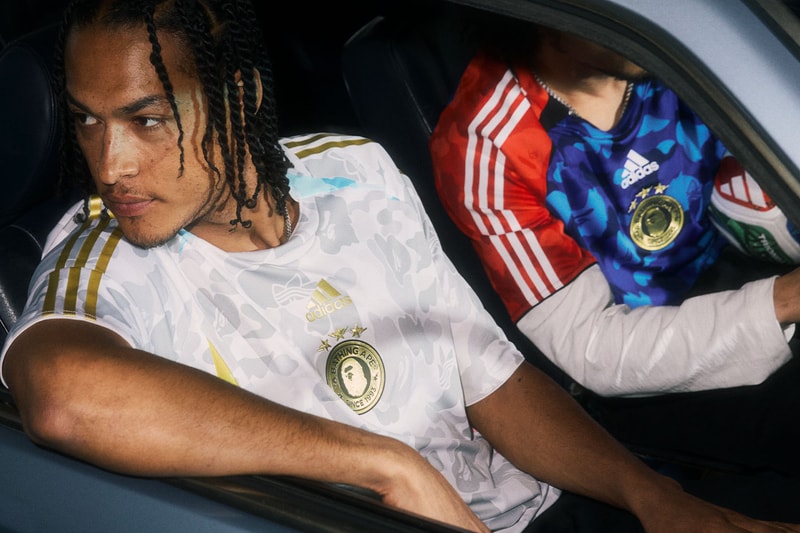
The FIFA World Cup 2026 is two weeks old, and Adidas has already recycled the tournament before it. On Saturday, Adidas Originals and A Bathing Ape released a capsule built on the Teamgeist jersey template, the silhouette that defined Germany 2006. The collection includes home and away kits and a pair of customized EVO SL runners. The timing is precise: the collaboration drops while the current tournament is still in group play, but the visual language points two decades backward.

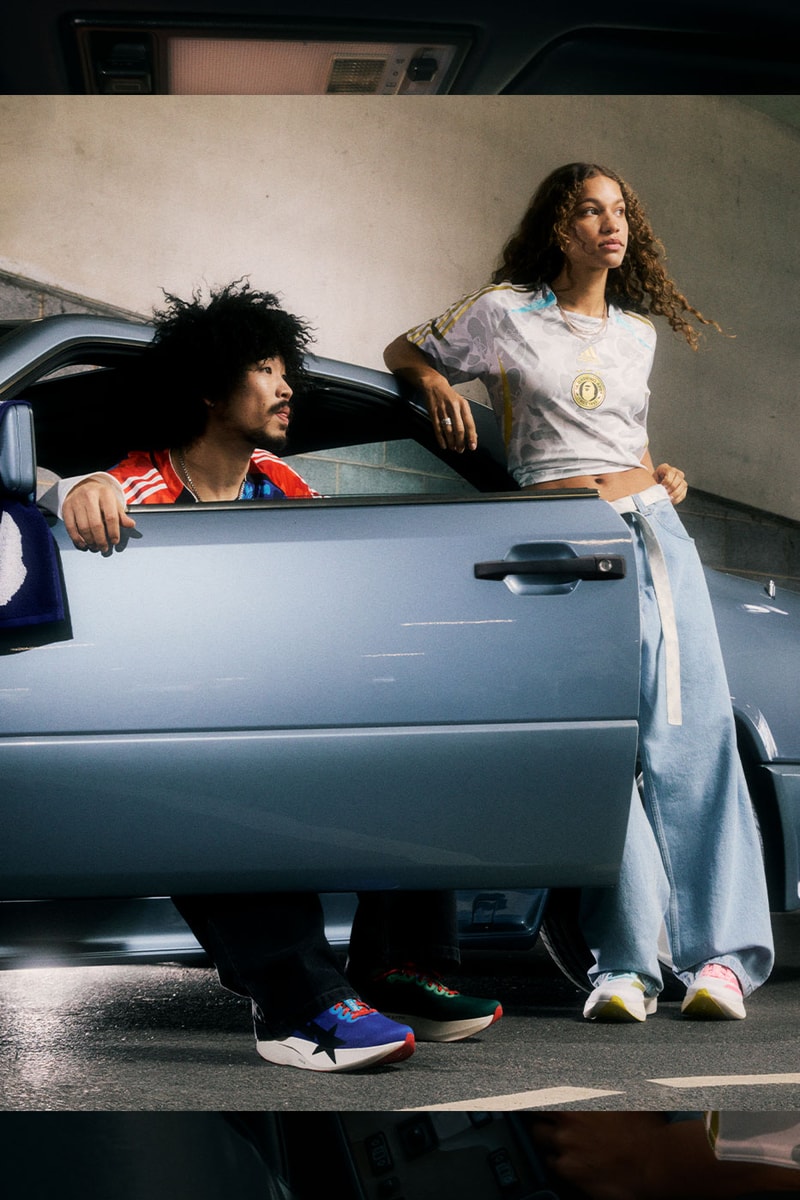
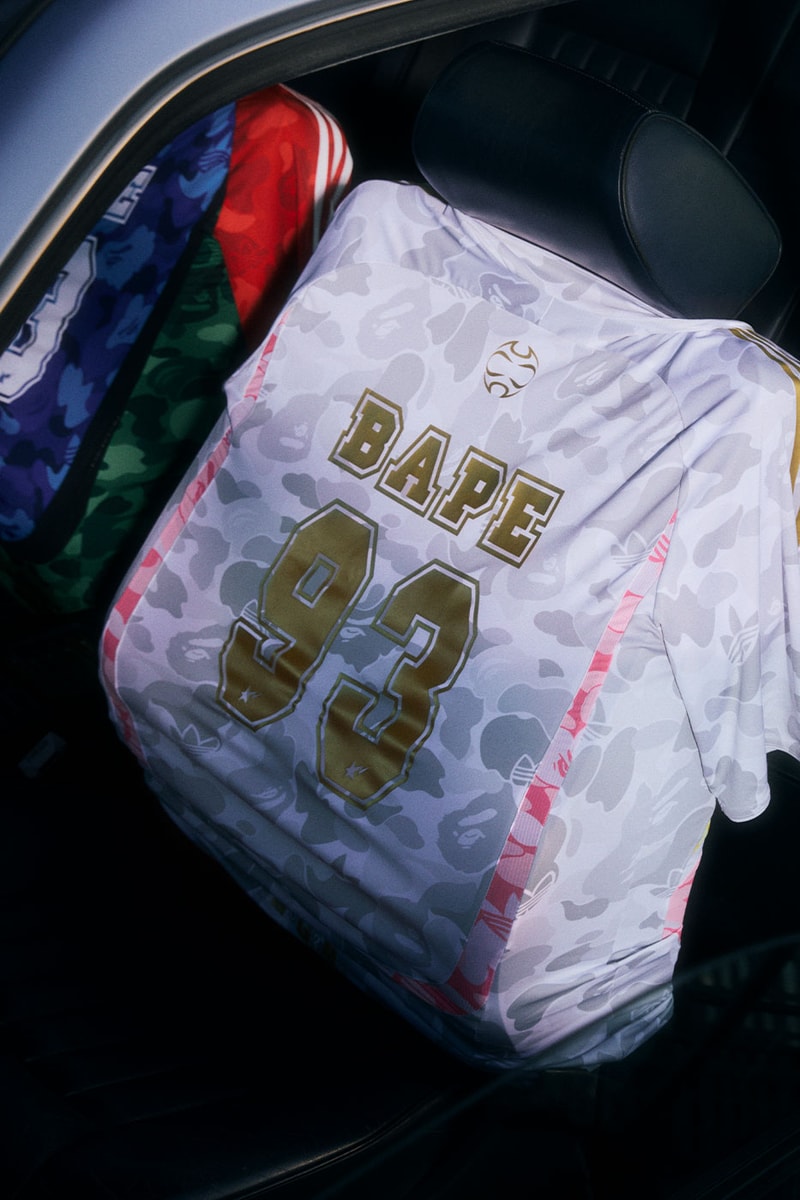
Teamgeist was not a minor footnote. It was the first World Cup ball and kit system to emphasize panel reduction and thermal bonding, marketed at the time as the future of performance soccer apparel. The jersey template became shorthand for that era, worn by Zinedine Zidane in his final international match and by the Italian squad that lifted the trophy. Reviving it now is not arbitrary. It is a bet that the audience for World Cup merchandise in 2026 skews toward consumers who were teenagers in 2006 and have the disposable income to pay for the memory.
BAPE's involvement follows a familiar script. The label has collaborated with Adidas on soccer-adjacent product before, most notably a 2023 capsule tied to club football. But the Teamgeist drop is more explicit in its target. The home and away structure mimics national team releases, and the camo patterning maps directly onto BAPE's signature graphic vocabulary. The result is a product that functions as both streetwear collectible and ersatz supporter kit, legible to two audiences at once.
What makes the release notable is less the product itself than the calendar logic it reveals. Adidas has spent the first half of 2026 flooding the World Cup cycle with collaborations: Awake NY with DoorDash for delivery-themed apparel, the Backyard Legends campaign for grassroots storytelling, the Someone Somewhere artisan credit initiative. Each targets a different demographic slice. BAPE reaches the collector market, consumers who see the purchase as an artifact rather than a garment. The jersey is not for wearing to the stadium. It is for framing alongside a 2006 original.
The nostalgia cycle in sportswear operates on roughly twenty-year intervals. Nike's recent Air Max revivals reference the early 2000s. New Balance's 1906R leans on millennial running heritage. Adidas citing Teamgeist in 2026 fits the pattern exactly. The question is whether the cycle has shortened, or whether brands are simply running multiple cycles simultaneously, layering 1990s, 2000s, and 2010s references in the same calendar year.
For BAPE, the collaboration is also a positioning move. The label's cultural footprint in the West has been uneven since the NIGO era ended. Streetwear's center of gravity has shifted toward European luxury houses and American outdoor brands. A World Cup capsule with Adidas reasserts BAPE's relevance in the sportswear conversation, at least for a single news cycle. Whether that relevance extends beyond the drop date is less certain.
The EVO SL runners included in the capsule are worth noting. Adidas has been building the EVO SL as a lifestyle running silhouette, positioned somewhere between performance and casual. Pairing it with a retro soccer template suggests the brand sees crossover potential, treating the shoe as a blank canvas for collaborative graphics rather than a pure performance product. It is the same logic that turned the Samba from an indoor soccer shoe into a fashion staple.
The Teamgeist revival arrives at a moment when World Cup merchandise is competing for attention with an unusually crowded cultural calendar. The tournament itself is spread across three countries and sixteen cities, diluting the geographic focus that previous World Cups used to concentrate hype. Adidas is responding by multiplying touchpoints, releasing capsules fast enough that each one functions as its own micro-event. The BAPE collaboration is one of at least four major drops in a two-week window.
Whether this approach builds cumulative momentum or fragments it is unclear. The consumer who buys the BAPE Teamgeist jersey may not be the same consumer who bought the Awake NY capsule, and neither may be the consumer who will buy whatever Adidas releases next week. What is clear is that the brand is treating the World Cup as a content calendar rather than a singular event, a series of overlapping campaigns that share a tournament logo but operate independently.
The jersey itself will sell out. BAPE collaborations typically do. The more interesting question is what happens to the template afterward. If Teamgeist reappears in subsequent Adidas releases, 2026 becomes the year the silhouette re-entered rotation. If it does not, the BAPE capsule remains an isolated artifact, a one-off citation of a twenty-year-old reference. Either outcome says something about how sportswear brands are choosing to manage their archives.